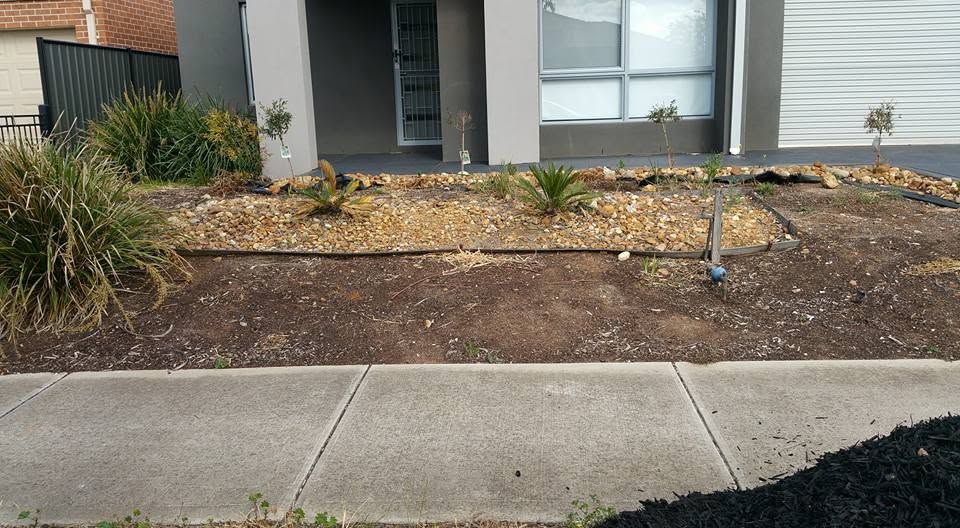
Mulching and Garden Waste Removal in Western Sydney
Fresh mulch is one of the quickest ways to lift a tired garden — it sharpens the look of the beds, protects exposed soil, slows surface weeds and cuts moisture loss through summer. Frank prepares the beds properly first, spreads the mulch, and takes the agreed green waste away. Old mulch, turf and accumulated garden waste can be removed in the same visit.
You're refreshing the garden before a sale, inspection or event
Green waste has piled up from pruning or a clean-up
You want the beds finished properly after weeding
Old mulch has broken down and gone grey or compacted
You need old turf or beds stripped before something new goes in
Pricing, honestly
How much does mulching and waste removal cost?
Mulching and waste removal from$150
Most garden bed mulching jobs land between $280 and $650 including mulch supplied and spread.
Small bed refresh
Front beds or a courtyard. Weeded, edged and topped up with fresh mulch.
$150 – $280
Standard garden mulching Most common
Front and rear beds on a typical block, prepped and mulched, mulch supplied and delivered.
$280 – $650
Old mulch or turf removal
Stripping out broken-down mulch or lifting old turf before something new goes down.
$320 – $980
Green waste removal only
Clearing an existing pile of clippings, prunings or leaves. Priced on volume and access.
$150 – $580
Mulching after a clean-up
Added to a clean-up in the same visit. Cheaper than booking it separately, since the prep is already done.
Quoted
Mulch supplied & spread
Beds prepped first
Waste taken away
Price fixed from photos
What moves the price
Bed area and mulch depth drive the volume needed, and volume drives most of the cost. After that it's access — mulch that has to be barrowed through a narrow side passage takes far longer than mulch tipped beside the beds. Prep work matters too: beds that need clearing and weeding before mulch goes down are a bigger job than a straight top-up.
What's not included
Green waste covered includes grass and hedge clippings, leaves, weeds, small branches and anything generated during the agreed work. Household rubbish, hazardous waste, large logs, soil, concrete and building waste aren't automatically included, though some can be arranged — ask when you enquire. And an honest note: mulch slows weeds, it doesn't permanently prevent them.
Fastest answer: text your photos and suburb to 0448 651 893
Choosing mulch
Which mulch suits a Sydney garden
There's no single best mulch — it depends on what the bed is doing and how it looks from the house.
Bark and pine bark
The default for ornamental beds. Holds its colour reasonably, breaks down slowly, and looks tidy against lawn edges. Larger grades stay put better on any kind of slope; finer grades look neater in small front beds.
Woodchip and arborist chip
Cheaper by volume and excellent at moisture retention, but coarser and more rustic. Good for larger beds, under established trees and along boundaries where appearance matters less than performance.
Sugar cane and straw mulches
Light, easy to spread and quick to improve soil as they break down, which makes them well suited to vegetable beds and newly planted areas. They break down fast though, so expect to top up more often.
Pebble and decorative stone
Doesn't break down, so it lasts — but it also feeds nothing back into the soil and gets very hot in a Western Sydney summer. Best for narrow strips, driveway edges and low-maintenance areas rather than planted beds.
The other question worth asking is depth. Too thin and weeds push straight through; too thick and water struggles to reach the roots, especially on the clay soils common across the North-West.
Old mulch & turf
Removing old mulch, turf and garden waste
Mulch doesn't last forever. After a few years it breaks down into a grey compacted layer that sheds water rather than letting it through, and topping new mulch straight over it just raises the level against plant stems and fence lines. Stripping the old layer out first is often the difference between a bed that works and one that stays permanently dry underneath.
Turf removal comes up for the same practical reason — lifting old lawn before new turf, garden beds or paving goes in. It's heavy, high-volume work, and the disposal is usually the bigger half of the cost rather than the lifting.
Accumulated garden waste gets cleared the same way: piles of clippings behind the shed, prunings stacked by the fence, bags that never made it to the tip. Send a photo with something in frame for scale and you'll get a realistic price.
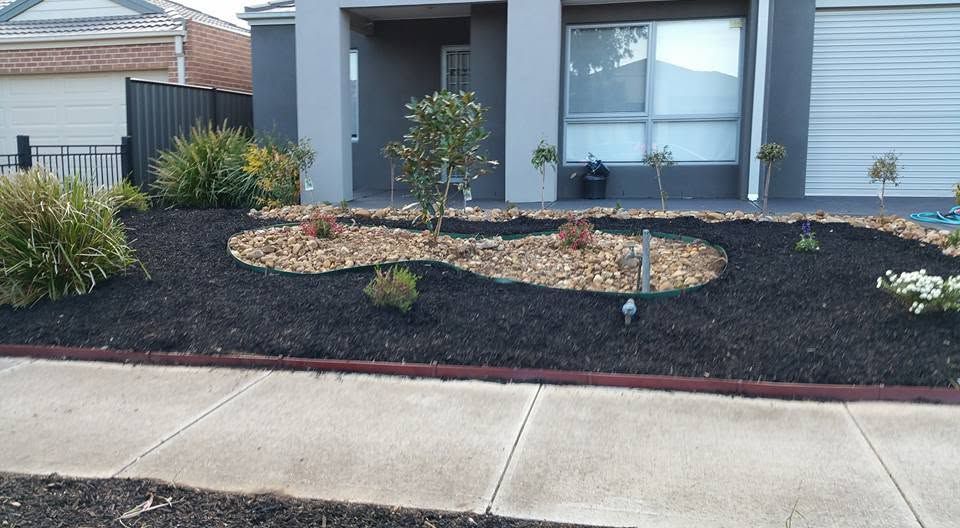
Front bed finished with black mulch — cleared, shaped and mulched for a sharp street-front finish.
Like this result? Text your photos to Frank for a free quote: 0448 651 893
Why FM Garden Services
Quoted by Frank. Done by Frank.
No call centre, no franchise manager, no changing crew. The person who quotes your job from the photos is the same person who turns up and does it — with 25+ years of practical experience and a 4.8-star rating from 385 completed-job reviews behind him.
Areas
Mulching and waste removal across North-West Sydney
Frank covers the North-West and Western Sydney corridor. If your suburb isn't listed, text and ask — it's usually a quick yes or no.
Most jobs land between $280 and $650 including mulch supplied, delivered and spread. A small front bed refresh starts around $150, and stripping out old mulch or turf beforehand runs $320 to $980 depending on volume and access.
Do you supply the mulch or do I?
Either way works. Frank can supply and deliver the mulch as part of the quote, or spread mulch you've already had dropped off. Supply is only included when it's specifically listed in the quote, so it's clear either way.
How deep should mulch be?
Deep enough to block light from weed seeds but not so deep that water struggles to get through — around 50 to 75mm suits most ornamental beds. Keep it pulled back from plant stems and trunks rather than piled against them.
Which mulch is best for Western Sydney clay?
An organic mulch that breaks down and feeds the soil is generally better than stone on clay, since clay benefits from the organic matter. Bark and woodchip both work well. Stone looks tidy but adds nothing to the soil and holds a lot of heat.
Will mulch stop weeds for good?
No. Mulch slows weeds significantly by blocking light, but seeds blow in, and anything with established underground roots will push through. Clearing the bed properly before mulching makes far more difference than the mulch type.
Should I weed before mulching?
Yes, and it's worth doing properly. Mulching over live weeds just delays them by a few weeks. Beds are cleared and weeded as part of the prep when mulching is quoted.
Can you remove old mulch before laying new?
Yes. Old mulch that has broken down into a compacted grey layer sheds water and is worth removing rather than covering. It also stops the bed level creeping up against fences and plant stems year after year.
Do you remove old turf?
Yes — lifting old lawn before new turf, garden beds or paving goes in. It's heavy work and high in volume, so disposal is usually the larger part of the cost. Photos with something for scale help get the quote right.
What green waste can be taken away?
Grass and hedge clippings, leaves, weeds, small branches and anything generated during the agreed work. Household rubbish, hazardous waste, large logs, soil, concrete and building waste aren't automatic but can sometimes be arranged.
Can you just take away a pile of green waste?
Yes, waste removal is available on its own without any other work. It's priced on volume and how far it has to be carried to the trailer, so a photo of the pile with the access route is the fastest way to a price.