Weeding and Garden Maintenance in North-West Sydney
Weeds move fast — a few weeks of growth can make garden beds, paths and edges look completely neglected. Frank clears unwanted growth by hand and around established plants, restoring a cleaner, more manageable garden without damaging what you want to keep. Beds, paving, driveways and fence lines all get done in the same visit.
You're preparing for guests, an inspection or a sale
The garden has become difficult to manage and needs a reset
You want beds cleared before fresh mulch goes down
Weeds are coming through paving, driveways and along fence lines
You've fallen behind after a wet stretch and it's got away
Pricing, honestly
How much does garden weeding cost?
Weeding visits from$150
Most weeding jobs land between $220 and $450. Heavily overgrown properties are quoted as a clean-up instead.
Small bed or courtyard
Front beds, a courtyard or a strip along the driveway. Hand weeded and waste taken.
$150 – $220
Standard property weeding Most common
Front and rear beds, paving, driveway edges and fence lines on a typical block.
$220 – $450
Overgrown beds
Beds that have disappeared under growth, with established roots to dig out and real waste volume.
$450 – $780
Weeding plus mulch
Beds cleared then mulched in the same visit — the combination that actually keeps them clear.
Quoted
Regular maintenance visits
Weeding included in a regular cycle. Far cheaper per visit, because beds never get established growth.
Quoted
Hand weeded, not just sprayed
Waste taken away
Price fixed from photos
Frank does the job himself
What moves the price
Area, density, and above all what kind of weeds you've got. Shallow annual weeds pull out fast; things with deep taproots or running underground runners have to be dug and take several times as long over the same square metre. Access and green waste volume do the rest.
Where a property is heavily overgrown, it's usually quoted as a full garden clean-up rather than a weeding visit, since substantial growth means more labour, different equipment and a lot more waste.
The honest bit
Nobody can guarantee weeds won't return. Seeds blow in, roots survive underground, rain brings a fresh flush and neighbouring properties contribute whether they mean to or not. Regular attention gives far better long-term results than waiting until beds are lost again, which is why many customers pair weeding with a maintenance schedule.
Fastest answer: text your photos and suburb to 0448 651 893
Know your weeds
The weeds that show up across North-West Sydney
Which weeds you have changes how long the job takes and how well it holds. These are the ones that turn up in almost every yard out here.
Bindii
The low-growing rosette in lawns through the cooler months. Harmless looking until it sets seed and turns into the prickles that make a lawn unusable barefoot in summer. Dealing with it before those seed heads form is far easier than dealing with it after.
Winter grass
Pale, tufty clumps through lawns in the cooler months, seeding prolifically before it dies off in the heat and leaves bare patches behind. It spreads by seed, so removing it before it sets is what breaks the cycle.
Nutgrass and oxalis
The two that frustrate people most. Both spread from underground tubers and bulbs, so pulling the top off achieves almost nothing — anything left behind reshoots within weeks. These need digging out properly and realistic expectations about repeat visits.
Clover and creeping weeds
Common through Kikuyu and Couch lawns, spreading sideways across the surface rather than seeding upward. Often a sign the lawn itself is thin or hungry, which means feeding the grass does as much as removing the weed.
Paving and driveway weeds
The ones that make an otherwise tidy property look neglected from the street. Growth through paver joints, along driveway edges and at the fence line is usually the first thing a visitor or an agent notices.
Method
Hand weeding versus spraying
Most of the work here is done by hand, and there's a practical reason rather than an ideological one.
Hand weeding takes the root with the plant and leaves the bed immediately clear. Spraying is faster over large areas but leaves dead brown growth in place for a week or two afterwards, which is no use at all if you have an inspection, an open home or visitors coming. Around established plants, hand weeding also avoids the risk of drift onto things you want to keep.
The other advantage is that it's the only approach that works on the weeds that matter. Anything spreading from tubers or runners needs the underground part removed, and no surface treatment substitutes for getting it out.
Once beds are clear, mulch is what keeps them that way — blocking light from the next flush of seeds and buying months rather than weeks before it all comes back.
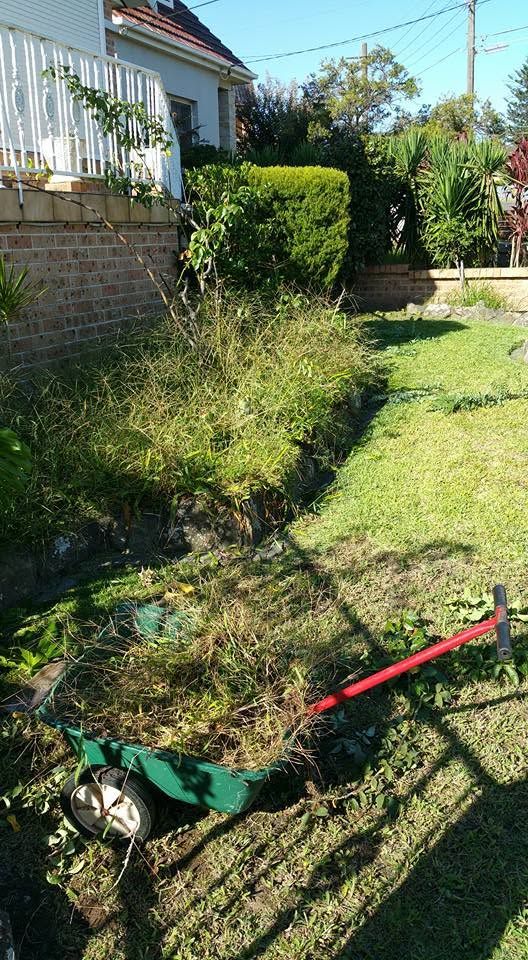
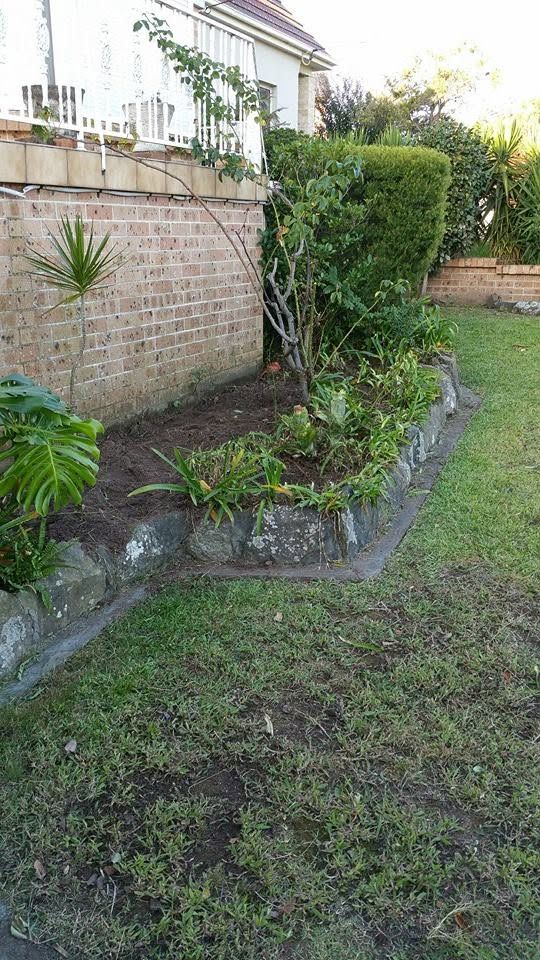
Garden beds cleared and tidied — weeds out by hand, edges defined, established plants left healthy.
Like this result? Text your photos to Frank for a free quote: 0448 651 893
Why FM Garden Services
Quoted by Frank. Done by Frank.
No call centre, no franchise manager, no changing crew. The person who quotes your job from the photos is the same person who turns up and does it — with 25+ years of practical experience and a 4.8-star rating from 385 completed-job reviews behind him.
Areas
Weeding services across North-West Sydney
Frank covers the North-West and Western Sydney corridor. If your suburb isn't listed, text and ask — it's usually a quick yes or no.
Most jobs land between $220 and $450 for a typical property, covering beds, paving, driveway edges and fence lines. Small beds or a courtyard start around $150, and heavily overgrown beds run $450 to $780.
Will the weeds come back?
Some will. Seeds blow in, underground roots survive, and rain brings a fresh flush. What changes the outcome is clearing them properly rather than just topping them, then mulching, and not leaving it so long that beds are lost again.
Do you spray weeds or remove them by hand?
Mostly by hand. It takes the root with the plant, leaves the bed immediately clear rather than full of dead brown growth for a fortnight, and avoids any risk of drift onto established plants nearby.
Why does nutgrass keep coming back?
Because it spreads from underground tubers rather than seed, so pulling the top off leaves the tuber behind to reshoot within weeks. It has to be dug out, and realistically it usually takes more than one visit.
Should I mulch after weeding?
Yes, if you want it to hold. Clear beds are exposed soil and the next flush of seed will find it quickly. Mulch blocks the light and buys months instead of weeks — it's often done in the same visit.
Can you weed paving, driveways and paths?
Yes, and it's usually the part that makes the biggest visible difference. Growth through paver joints and along driveway edges is the first thing people notice from the street, even when the beds themselves are fine.
My garden beds have completely disappeared. Is that still a weeding job?
Probably not. Once beds are fully overgrown it's usually quoted as a garden clean-up instead, because it involves more labour, different equipment and much more green waste. Send photos and you'll be told which one it is.
Will you pull out my plants by mistake?
No. Weeding is done by hand around established plants for exactly that reason. If there's anything self-seeded or unusual you want kept, point it out beforehand or flag it in the photos.
How often should weeding be done?
It depends on the season — growth is fastest through spring and after rain. Most gardens do well with a proper clear-out and mulch, then regular attention every few weeks so nothing gets established.
Do you take the weeds away?
Yes, green waste from the agreed work is removed as part of the quote. On heavily overgrown beds the waste volume is a real part of the cost, which is why photos help get the price right first time.